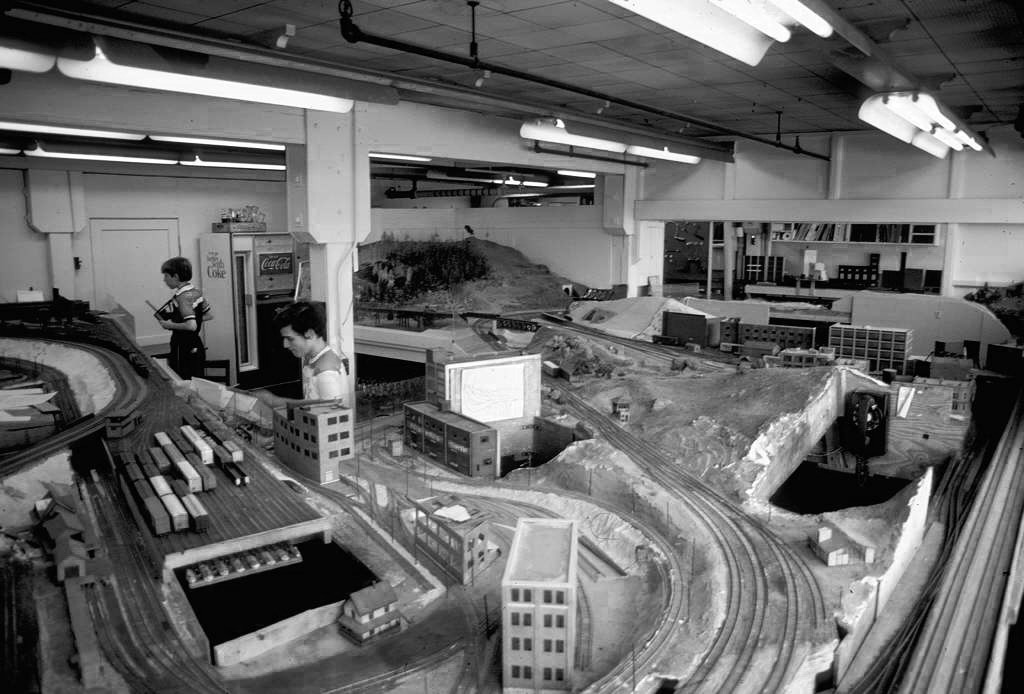
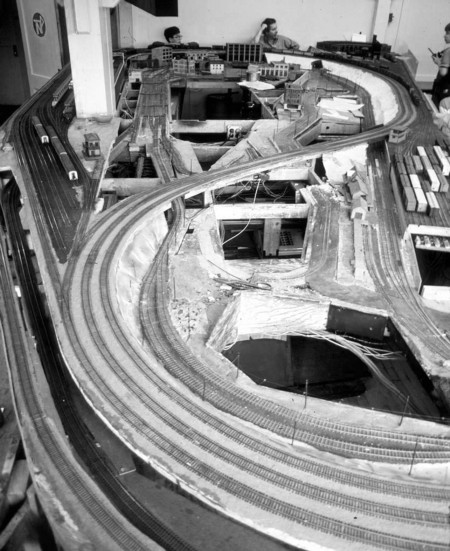
“Since TMRCies were known for their creativity and ingenuity Digital was kind enough to donate to TMRC the first PDP 11 to appear at MIT; this made the Club the first MIT student group to ever have a computer! Soon TMRCies combined the operation of WECo’s donations and Digital’s PDP 11 to create cab assignment and switching though the computer. The computer also allowed the implementation of ‘phone operation’ – that is, switches could be thrown via the telephone system within the club room! (This phone system, to be named MaRoto, was also a TMRC customized item.)”
http://tmrc.mit.edu/bldg20.html
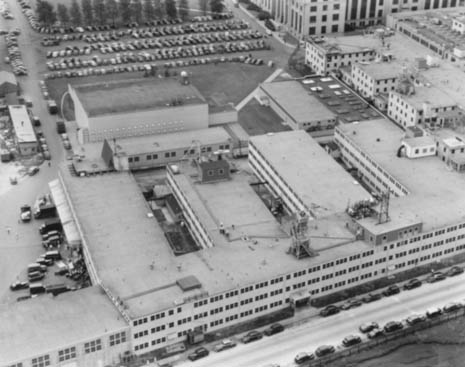
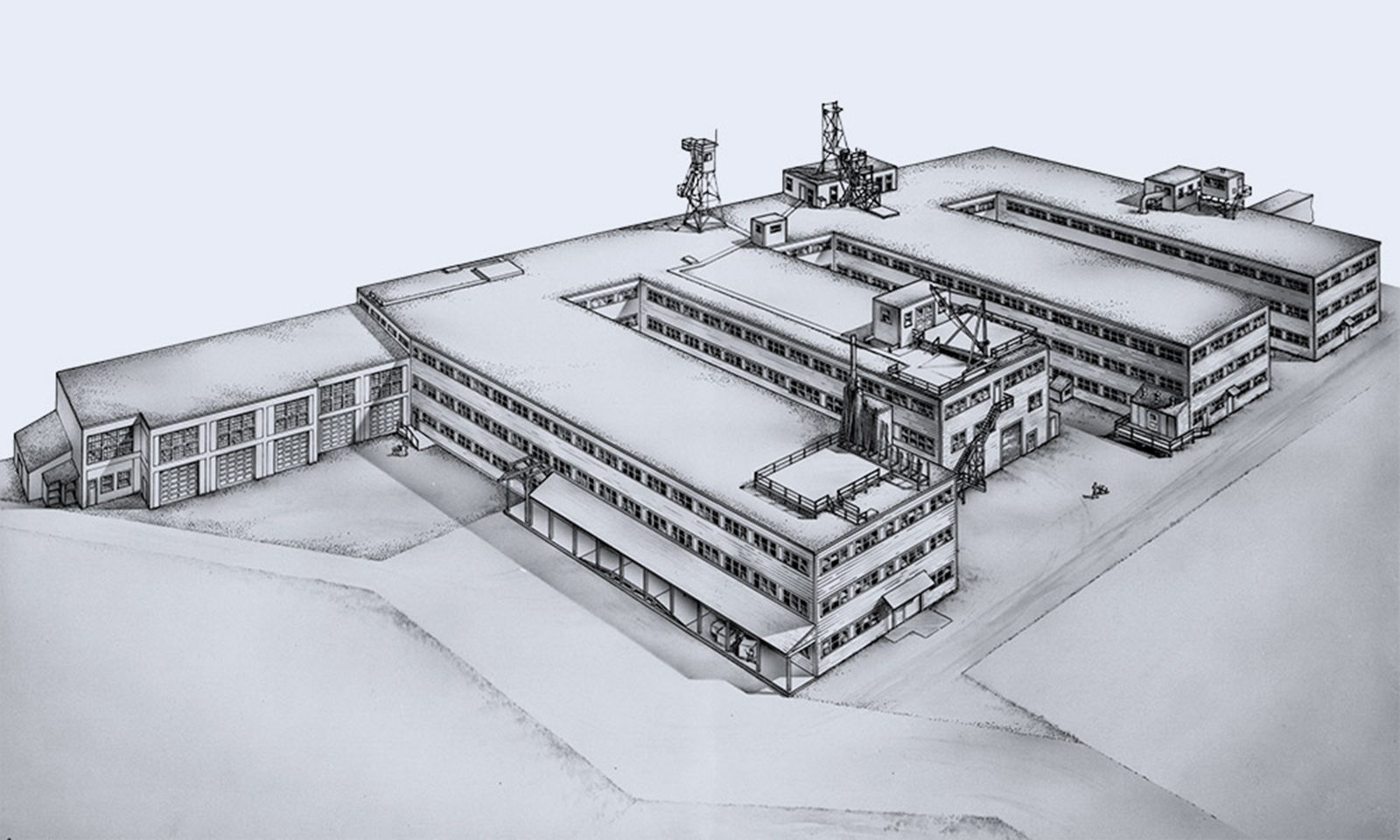
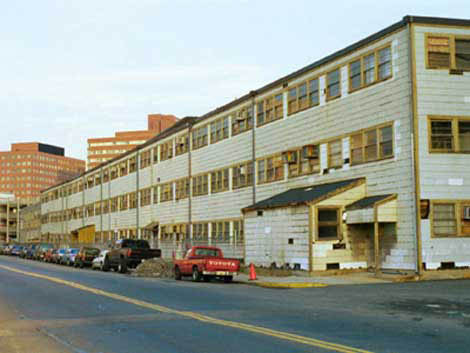
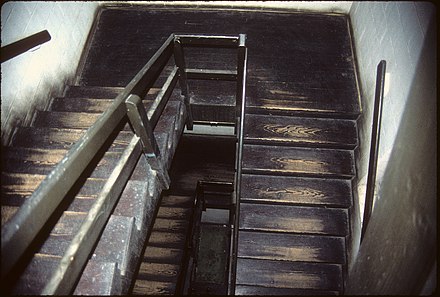
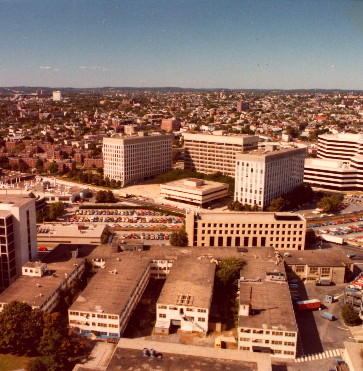
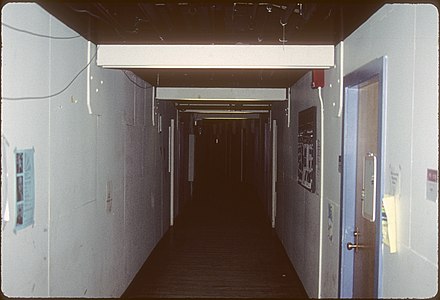
“Here’s what I found: the building was hastily-constructed of plywood. It leaked. It had bad acoustics and was poorly lit, inadequately ventilated, very confusing to navigate (even for people who had been working there for years) and was scorching in the summer and freezing in the winter.”

https://www.architects.org/stories/serendipity-when-walls-get-in-the-way
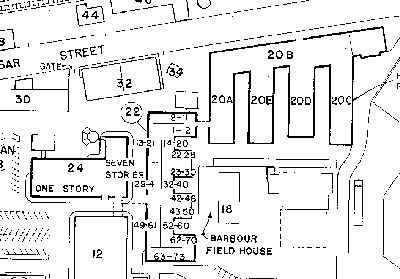
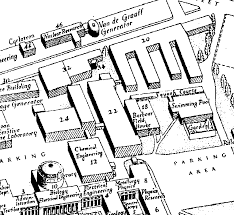
Occupants of Building 20 in 1963 (from Staff Telephone Directory, compiled by MIT Institute Archives)
Army, Military Science
Campus Patrol (20C-128)
Data Processing (20C-220)
Ice Research Lab (20E-206)
Industrial Hygiene Lab (20B-245)
Lab for Nuclear Science, linear accelerator (20D-014)
MIT Press (20B-120)
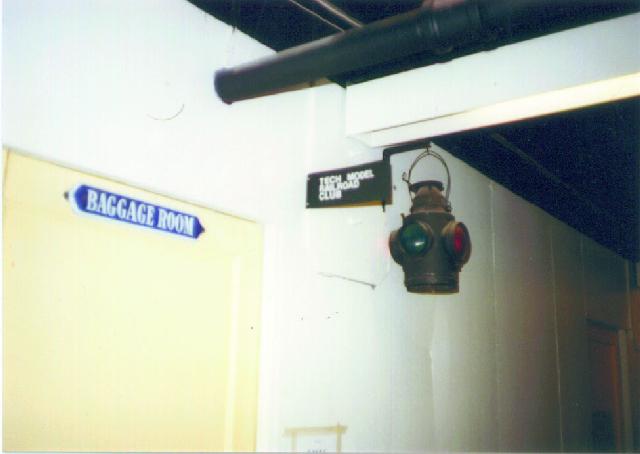
Model Railroad Club TMRC (20E-214)
Occupational Medical Services (20B-238)
Physics Labs
Research Corporation (20B-111)
Research Lab of Electronics
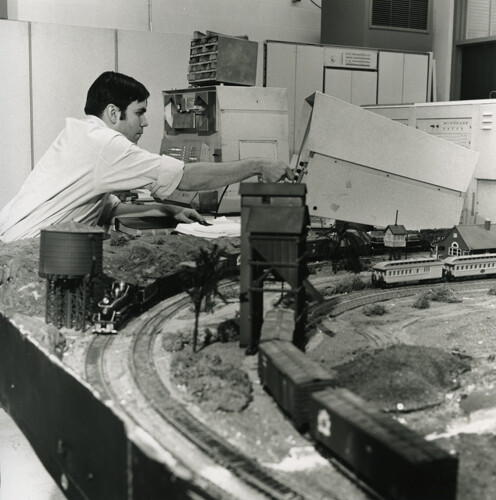
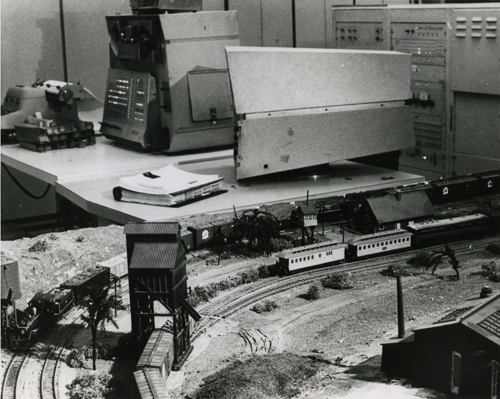
“The PDP-1 that originally went to Bolt, Beranek & Newman to be used in a more formal environment than at MIT was eventually retired to the University of Massachusetts at Amherst in 1968 during my own tenure there and was connected to a model railroad. It still had SpaceWar! as the primary program.
(J.A.N. Lee, ibidem, p. 272)”
https://wheels.org/spacewar/stone/rolling_stone.html
According to this link:
https://retrocomputingforum.com/t/the-tech-model-railroad-club-mit-1946-onwards-hacker-culture/3548
Posted by the user NoLand
Notably, the MIT wasn’t the only university which featured a model railroad, which also leads to a few confusions. E.g, in this context, we have to point out a couple of photos that are frequently distributed with the tag line “The PDP-1 at the Tech Model Railroad Club.”
Here’s one of them and even the CHM has it under the title “History – PDP-1 at the Tech Model Railroad Club” in its catalog.
There are some details that don’t add up. Notably, the PDP-1 was never at the TMRC and there wasn’t even a possible time window for this to happen. As it turns out, this is at the University of Massachusetts Amherst in 1968, and the person seen operating the PDP-1, which was indeed used to control the layout seen in the foreground, was J.A.N. Lee, Head of the then new CS program. The machine seen in the picture, is the PDP-1B production prototype that was originally installed at BBN in 1960 and was once used for Ed Fredkin’s pioneering timesharing system.
(Marginally interesting is that, while the machine had originally a detached operator’s console, this was now mounted to what looks like the integrated paper tape reader found on the production models, which it seems to have acquired over the years and which promotes a somewhat deplorable impression regarding the state of the computer, as if dismantled half-ways. BTW, the PDP-1 is the white (or rather cream colored) cabinets seen in the background of the photo. What’s balancing on the combined paper tape reader and console assembly may be a paper tape punch, as indicated by the rails around what looks like a slot seen at its top. The tape punch is the vertical slot seen at the right of the top front panel of the production models. — And, yes, as the machine retired to UMas, it was found to still have a copy of Space War in its non-volatile core memory.)
And, to close the circle, the image first publicly appeared (with a correct tag line) in a review of Steven Levy’s “Hackers”, the very book that popolarized the notion of the TMRC. This review was written by the same J.A.N. Lee, we see in the photo, and is found on page 271 of the Annals of the History of Computing, vol. 7, no. 3, July, 1985 (J.A.N. Lee, “Reviews: Levy, Steven. Hackers”, pp. 270-272).