In Traveling Witch, the player brews potions to bring happiness to people around the world. The game provides a portable cabinet full of wicked ingredients and a half-sized cauldron that hasn’t been cleaned for generations. Players have to figure out what potion to brew based on their conversations with visitors.
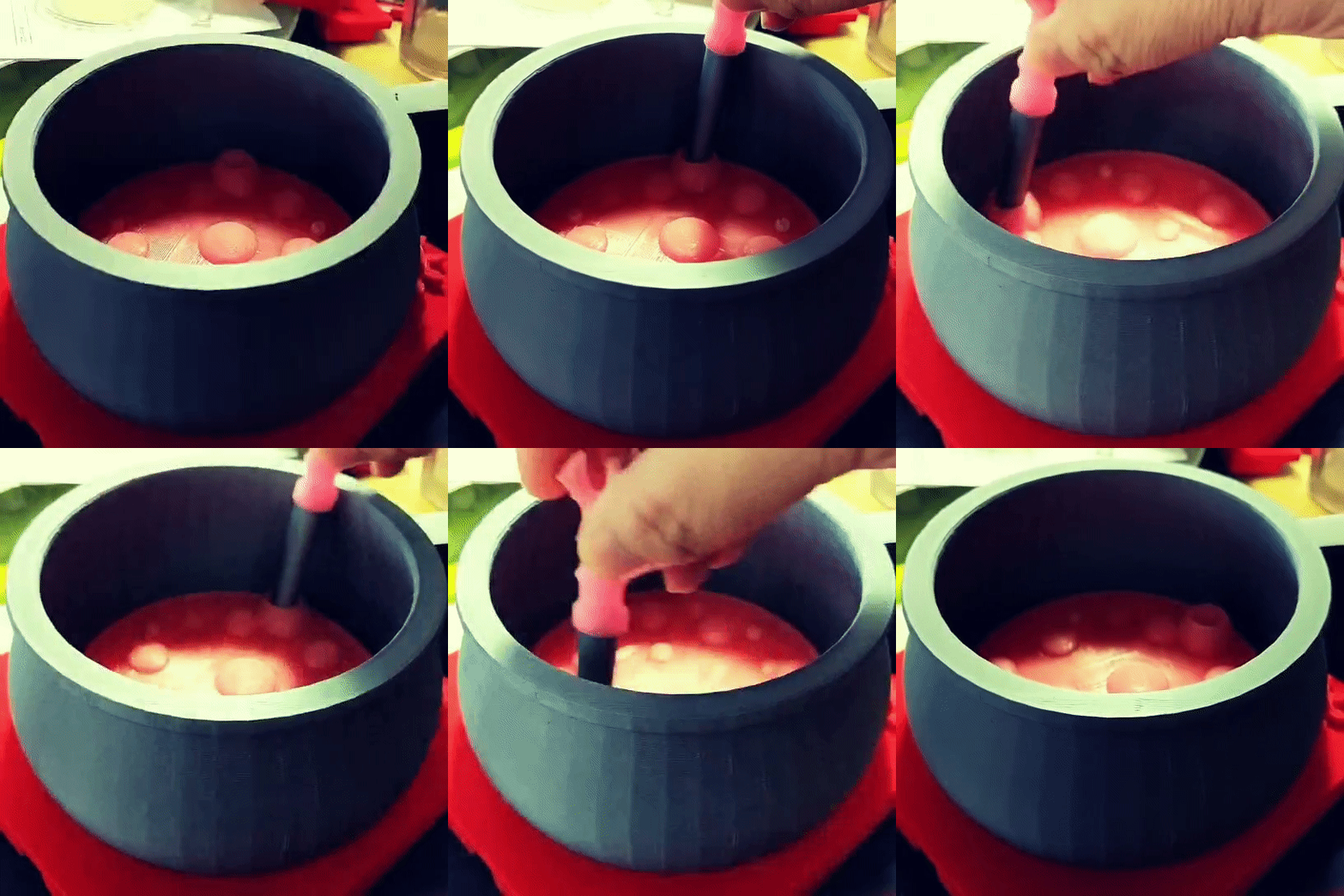
The physical controller playset was designed to simulate the act of brewing potions. Based on conversations with visitors, players refer to their notes (the clue book), select the correct ingredients, and stir the cauldron in a particular way to complete the potion. These physical interfaces provide an intuitive, tactile experience that elevates the gameplay’s sense of playfulness and immersion.
Here is a video without the physical clue book:
https://www.instagram.com/p/C3OfLvORXUd
I made a cauldron controller in 2020 (here). Originally, the controller was meant to do two things — read multiple ingredients (RFID tags) and use stirring motion (KY-040) as an input. The multi-RFID reader board wasn’t that reliable at the time. Depends on how the RFID tags was stacked, not all tags were read properly. However, stirring both clock and counter-clock wise was working and felt very satisfying. I have wanted to build an example of a simple ID system, I decided to come back to the cauldron and try a different approach to id the ingredients.
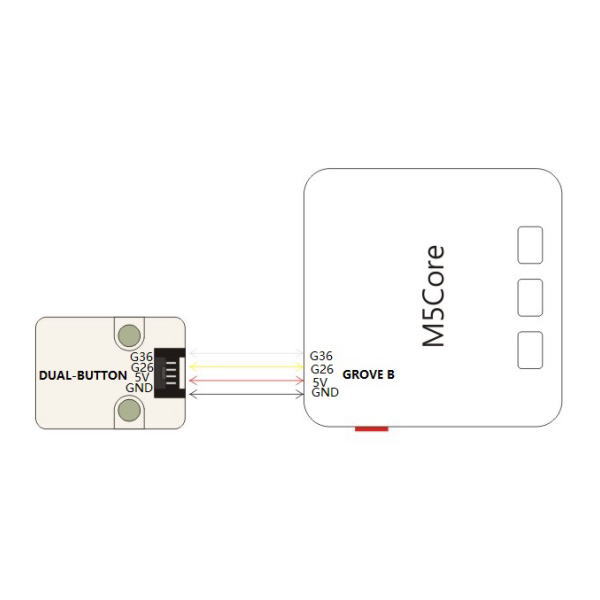
The old cauldron was made of KY-040 and Adafruit Feather. I decided to build the ID input module and cauldron with M5Stack this time because a stack of Limit Switch units (SKU: U145) is perfect for creating a simple ID system. I made the ID input module in the form of an alchemy cabinet. The player can insert the ingredient data card from the top of the cabinet and press down to send in ID. Switch-based ID system is a simple but effective method used in many interactive toys. Every switch has an on and off state. I used 5 switches to create 2 to the power of five -1 IDs for this play experience. -1 is because 00000 won’t work in my setup. I am only using 5 ingredient data cards at the moment.
M5Stack Fire Document:
https://github.com/m5stack/m5-docs/blob/master/docs/en/core/fire.md
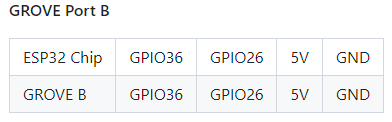
Working with the M5Stack unit – Limit Switches:
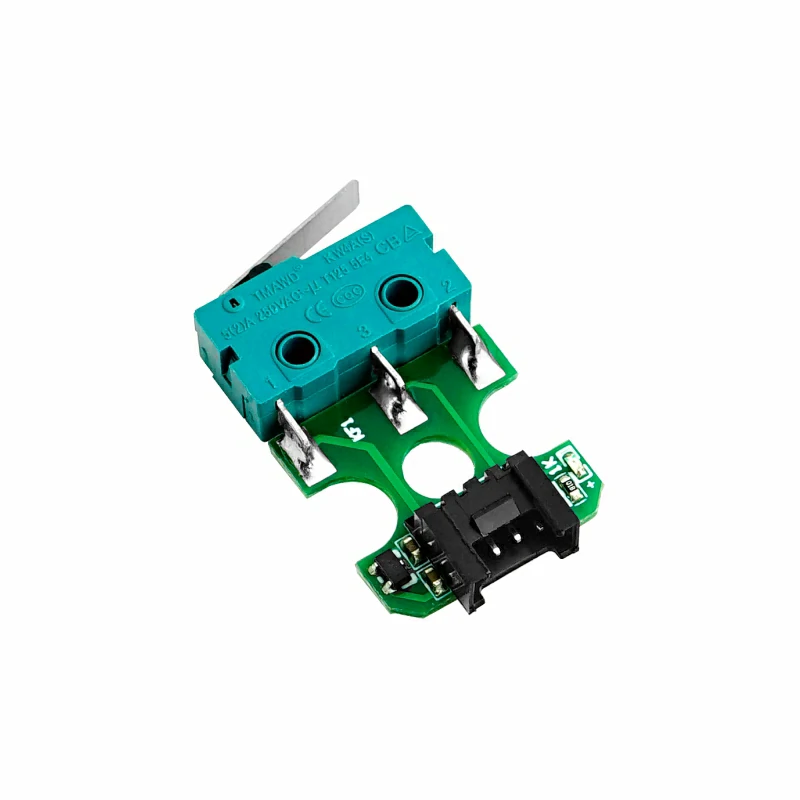
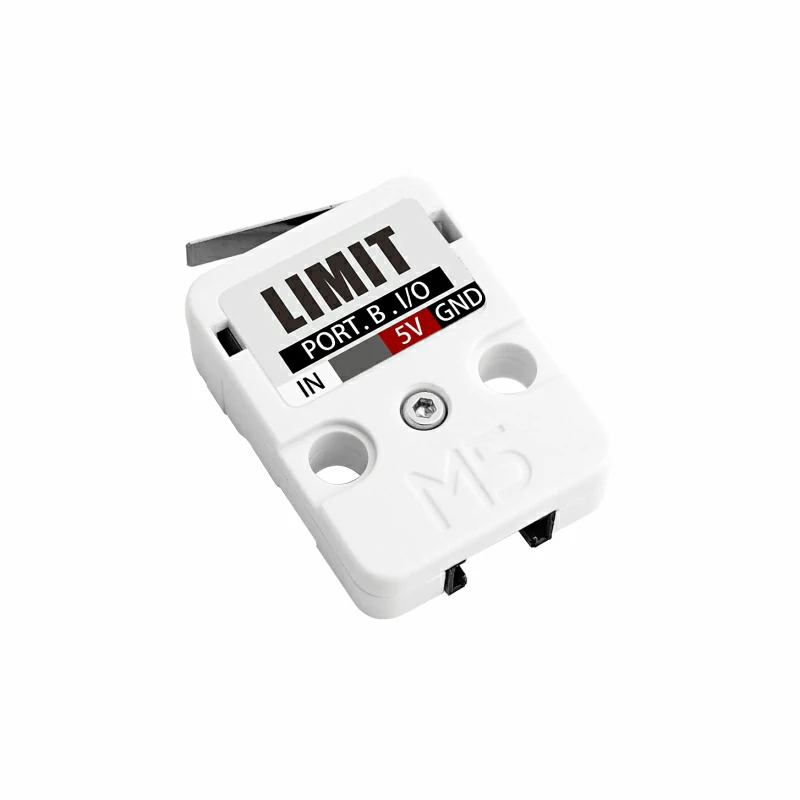
I wanted to create an ID system using 5 limit switch units. However, I found out only 4 of the 6 ports on pHub unit can be used as digital inputs. The rest two are analog only. This is not a road blocker, it only makes reading switches a little more complicated.
https://shop.m5stack.com/products/limit-switch-unit
Working with KY-040:
I started out with the basic example code that can be easily found on the internet. There were little unwanted jumps on directions here and there, but it was acceptable. However, when I started to add more code to the sketch, the amount of jumps increased drastically. At first, I had suspected it might have something to do with debouncing. The amount of jumps remains the same after trying both software and hardware debouncing. I then found out the code I added to the sketch, especially in the loop(), slows down each loop cycle by about 6 ms compared to close to 0 ms with just the KY-040 example code. I eventually found a workaround using interrupts which in a nutshell is like threading for Arduino. It works perfectly without any jumps on directions when stirring the cauldron.
https://github.com/ownprox/Rotary_Encoder_KY-040_Fixed/
3D models – Medicine Cabinet

3D Model – Cauldron

What goes into a witch’s cauldron?
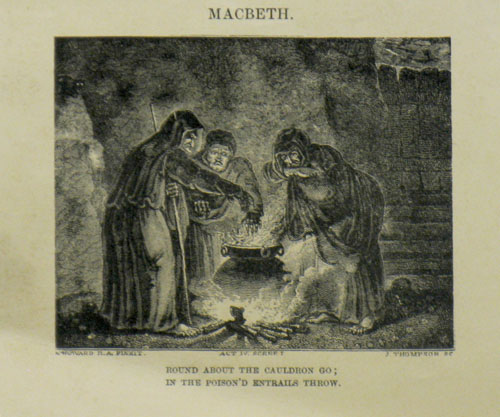
Macbeth, Act IV, Scene I (William Shakespeare 1564 – 1616)
The three witches, casting a spell
[First Witch]
Round about the cauldron go; In the poison’d entrails throw. Toad, that under cold stone Days and nights hast thirty one Swelter’d venom sleeping got, Boil thou first i’ the charmed pot.
[All]
Double, double toil and trouble; Fire burn and cauldron bubble.
[Second Witch]
Fillet of a fenny snake, In the cauldron boil and bake; Eye of newt, and toe of frog, Wool of bat, and tongue of dog, Adder’s fork, and blind-worm’s sting, Lizard’s leg, and howlet’s wing, For a charm of powerful trouble, Like a hell-broth boil and bubble.
[All]
Double, double toil and trouble; Fire burn and cauldron bubble.
[Third Witch]
Scale of dragon, tooth of wolf, Witches’ mummy, maw and gulf Of the ravin’d salt-sea shark, Root of hemlock digg’d i’ the dark, Liver of blaspheming Jew, Gall of goat, and slips of yew Sliver’d in the moon’s eclipse, Nose of Turk, and Tartar’s lips, Finger of birth-strangled babe Ditch-deliver’d by a drab, Make the gruel thick and slab: Add thereto a tiger’s chaudron, For the ingredients of our cauldron.
[All]
Double, double toil and trouble; Fire burn and cauldron bubble.
[Second Witch]
Cool it with a baboon’s blood.
Then the charm is firm and good.
These gruesome-sounding names are most likely used for dramatic effect rather than literal ingredients. For example, “Tiger’s chaudron” refers to tiger guts or entrails. However, when the ingredient is listed in modern analyses, it is interpreted to mean lady’s mantle, a common herb.
- eye of newt: a mustard seed.
- fillet of a fenny snake: leech or root of a plant
- toe of frog: bulbous buttercup
- wool of bat: moss and holly
- Owlets wing: garlic
I thought I started with these 5: Hemlock root, toad, fillet of a fenny snake, eye of newt, and wool of bat.
The Clue Book:
Potions in Dungeons & Dragons:
https://www.reddit.com/r/DnDBehindTheScreen/comments/4btnkc/random_potions_table/
https://www.reddit.com/r/DnD/comments/2134j6/4e_crazy_and_fun_potion_ideas/
Interestingly, upon examining how D&D books might simplify potion recipes, I was struck by the remarkable similarity between potion-making and the practice of traditional Chinese herbal medicine.
Chinese herbal medicine utilizes ingredients derived from plants, minerals, and animals to restore balance and harmony to the body’s vital energy, or Qi. These components are typically combined into formulas tailored to an individual’s specific condition. Much like the exotic ingredients one might find in a fantasy cauldron, the herbs themselves often bear wonderfully imaginative names.
- Earth Dragon: Earthworm
- Ground Turtle: A bone-connecting-insect that lives in soil
- Dragon Coat: Snake skin
- Chicken Inner Gold: The inner lining of a chicken’s gizzard
- Blood Residue: A carbonized substance obtained from charred human hair.
- Yellow Dragon Extract: Essentially liquid from aged human feces.
In order to prepare a Chinese herbal decoction, first soak the herbs in water for about 30 minutes. Then, boil and simmer the mixture for 45-60 minutes before straining the liquid. The process is repeated with the same herbs, using less water to extract a second, more concentrated decoction. The two liquids are combined to create the final drink. The brewing process and the end product is very similar to potion-making in my mind. The only notable difference from Chinese herbal decoction-making is the specific advice against using a cast iron pot which is what most cauldrons made of.
